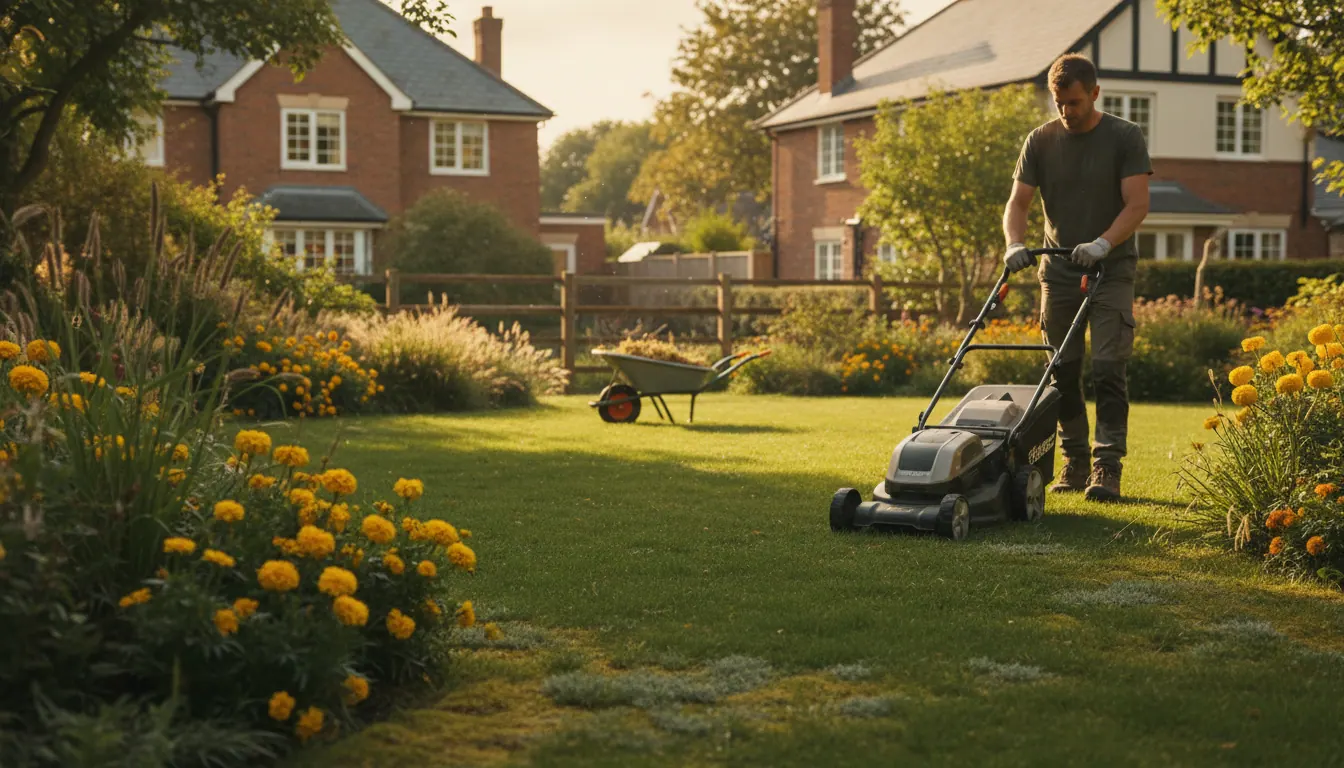
Spring lawn care checklist for Hemel Hempstead gardens
Get your lawn looking its best this spring in Hemel Hempstead and across Hertfordshire, Bedfordshire, Buckinghamshire and London. Practical advice from K. Tomlin Gardening & Lawn Specialists.

Spring lawn care in Hemel Hempstead: what your lawn needs right now
Spring arrives and suddenly the lawn is visible again after months of grey skies and soggy ground. If you live in Hemel Hempstead or anywhere across Hertfordshire, Bedfordshire, Buckinghamshire or London, you will know that feeling of stepping outside in March or April and realising the grass has been quietly suffering all winter. Moss has crept in. Bare patches have appeared. The edges look ragged. The good news is that with the right work done at the right time, a lawn can recover brilliantly. Here is exactly what we do and what we recommend to get it there.
Why spring is the most important season for your lawn
Winter takes a toll. Frost, waterlogging, foot traffic on soft ground and a lack of light all leave their mark. Spring is when the grass genuinely wants to grow again, and that growth means it can repair itself, if you give it a little help.
Do the right jobs now and you set the lawn up for the whole year. Leave them until summer and you spend the warmer months trying to rescue a lawn that should already be thriving. That is why we treat spring as the foundation season for every lawn we look after in Hemel Hempstead and the surrounding areas.
Step one: let the ground dry out before you do anything
This is the step people most often skip. After a wet winter, the soil beneath your lawn is compacted and saturated. Walking on it, mowing it or raking it hard while it is still waterlogged will cause more damage than it fixes. You will compact the soil further, tear up grass roots and create ruts that take months to level out.
Wait until the surface firms up. A simple test: press your heel into the lawn. If it sinks more than a centimetre or so, hold off. Give it another week and test again.
Step two: the first mow of the year
Once the ground is firm enough to walk on without leaving deep footprints, it is time for the first cut. Keep it high. We always recommend setting the mower to its highest or second-highest setting for the first couple of cuts of the season. Cutting too short too soon stresses the grass and gives weeds and moss an easy opportunity to fill the gaps.
Aim to remove no more than a third of the grass blade in any single cut. If the lawn has grown long over winter, bring it down gradually over two or three mows rather than scalping it in one go.
For more detail on how mowing frequency changes through the seasons, our article on how often should you mow a lawn in Hemel Hempstead through autumn and winter covers the thinking behind it well.
Step three: scarifying and raking out thatch
Thatch is the layer of dead grass, moss and organic debris that builds up at the base of the lawn. A thin layer is fine. A thick one stops water, air and nutrients reaching the roots.
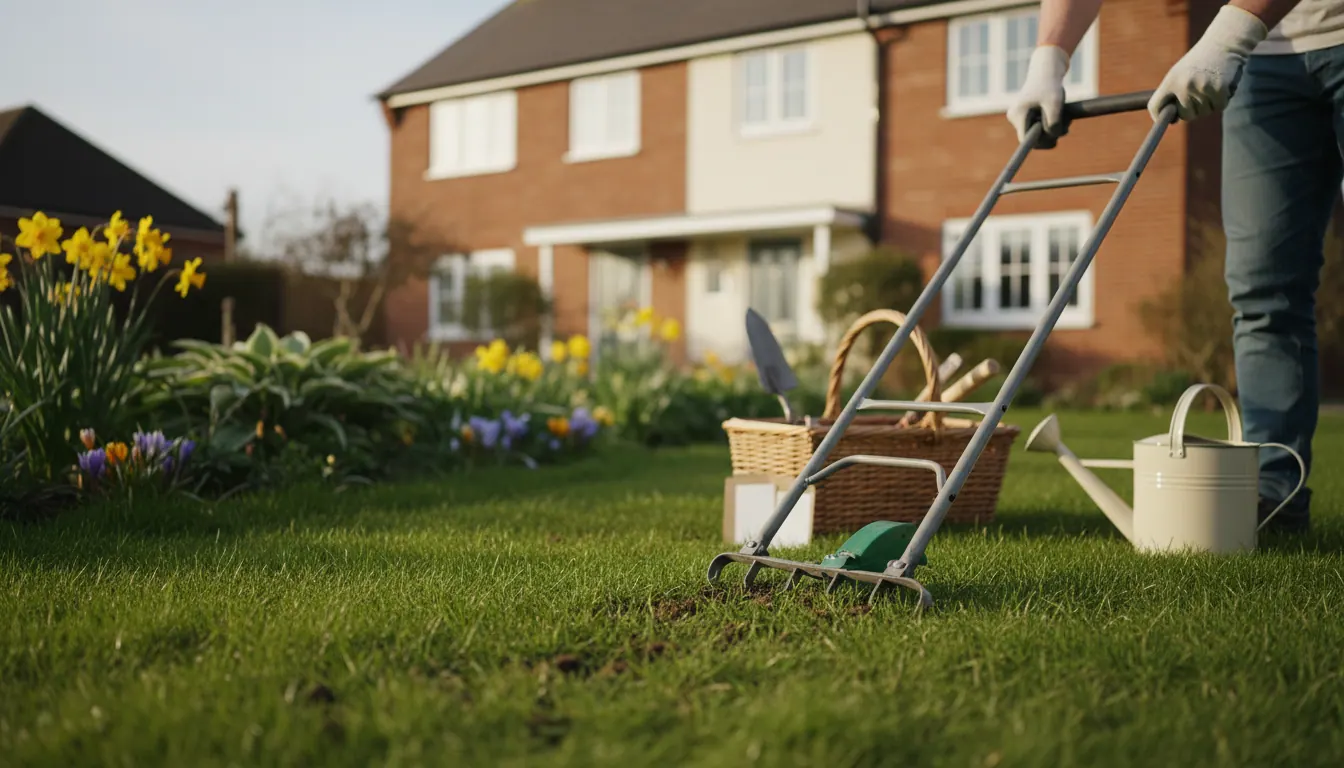
Spring is a good time for a light scarify or a thorough rake. You can do this by hand with a spring-tine rake, or with a powered scarifier for larger lawns. Either way, expect it to look worse before it looks better. Removing thatch exposes the lawn and it can look patchy for a week or two. That is normal. The grass fills back in quickly once it is growing strongly.
Pull out what you rake up and dispose of it. Leaving it on the lawn defeats the purpose.
Step four: aeration
Compacted soil is one of the biggest enemies of a healthy lawn. Water sits on the surface rather than draining through, roots struggle to breathe and grass thins out. Aerating breaks up that compaction and makes a real difference.
For a small lawn, a garden fork pushed in to a depth of around 10 cm every 10 to 15 cm across the whole surface does the job. For larger areas, a hollow-tine aerator or a spiked roller is more practical. If you have a large garden and this feels like a big undertaking, it is one of the jobs we are happy to take on as part of a spring visit.
Step five: dealing with moss and weeds
Moss loves damp, shaded, compacted lawns. If you have it, aeration and scarifying will help, but you may also need to look at the conditions that are encouraging it: poor drainage, low light, or soil that has become too acidic over time.
Weeds in lawns tend to appear in bare or thin patches. The best long-term defence is a thick, healthy lawn that simply does not give weeds space to establish. Regular mowing at the right height helps here. For persistent or widespread weeds, a professional can advise on the best approach for your particular lawn.
We always recommend non-chemical approaches where practical: hand weeding, improving lawn density through overseeding, and keeping on top of mowing so weeds do not get a chance to seed. For advice on weed control beyond the lawn, our article on autumn garden clearance in Hemel Hempstead: tackling weeds and overgrowth gives a useful overview of the general principles.
Step six: overseeding bare patches
Bare patches are common after winter. Overseeding is the straightforward fix. Scratch the bare area lightly with a rake to loosen the surface, scatter grass seed evenly, press it down gently and keep it moist until it germinates. Choose a seed mix that matches the rest of your lawn: shade-tolerant if the patch is under trees, hard-wearing if it is a high-traffic area.
Spring is a good time for this because the soil is warming up and there is usually enough natural rainfall to help the seed establish without constant watering.
Step seven: edging and tidying the borders
A freshly mown lawn with crisp, clean edges looks dramatically better than the same lawn with ragged, overgrown borders. Edging along paths, beds and fences is one of those jobs that takes relatively little time but makes a huge visual difference.
Use a half-moon edging iron or a long-handled edging shear to redefine the line. Once the edge is cut, maintain it through the season with edging shears or a strimmer after each mow. It is the kind of detail that separates a tidy garden from a really well-kept one, and it is something Kevin takes real pride in getting right.
What our customers say
We are proud of the feedback we receive from customers across Hemel Hempstead and beyond. Here is what one of them had to say:
Highly Recommend Kevin if you need and kind of garden work. Cuts my front and back garden every month, kills weeds and also removes any waste.
Flo Bojaj, 5-star review
That combination of regular mowing, weed control and waste removal is exactly what a well-maintained lawn needs through spring and summer. It is not complicated, but it does need to be done consistently.
Building a regular spring and summer routine
The biggest mistake people make with lawn care is treating it as a series of one-off jobs rather than an ongoing routine. A lawn that gets mowed regularly, at the right height, stays healthier and looks better than one that gets neglected for weeks and then cut hard.
Through spring and into summer, a well-managed lawn in Hemel Hempstead typically needs mowing every one to two weeks, depending on how quickly it is growing. Edges need tidying each time. Weeds need dealing with before they seed. It adds up to a manageable amount of work if you keep on top of it, but it can feel overwhelming if you let it slip.
That is exactly the kind of regular, reliable service we provide. Many of our customers book us for monthly or fortnightly visits through the growing season so they can simply enjoy their garden without the effort.
For a full breakdown of what a regular service covers, take a look at our article on monthly lawn maintenance in Hemel Hempstead: what a regular service includes.
Frequently asked questions
When should I start mowing my lawn in spring in Hemel Hempstead? As soon as the grass is actively growing and the ground is firm enough to walk on without leaving deep impressions, usually from mid-March onwards depending on the year. Start on a high cut setting and bring it down gradually over the first few mows.
How do I get rid of moss in my lawn? Scarifying and raking out the moss is the first step. Then look at why it appeared: compaction, poor drainage and shade are the usual causes. Aerating, improving drainage and overseeding thin areas all help prevent it coming back. If moss is a persistent problem, get in touch and we can have a look at what is driving it.
Should I feed my lawn in spring? A spring lawn feed can give grass a useful boost as it comes out of winter, but we would always recommend improving the physical condition of the lawn first: aeration, scarifying and overseeding before any feeding. A healthy, well-aerated lawn will make far better use of any feed you apply.
Can you help with spring lawn care across Hertfordshire, Bedfordshire, Buckinghamshire and London? Yes, we cover Hemel Hempstead and the wider areas of Hertfordshire, Bedfordshire, Buckinghamshire and London. Whether you need a one-off spring tidy-up or a regular lawn care routine through the growing season, we are happy to help. Just get in touch and we can discuss what your lawn needs.
Get your lawn off to the best start this spring
Spring is a short window and it matters. The work you put in now pays off all the way through summer. If you would rather leave it to someone who knows what they are doing and takes pride in the finish, we would love to help.
Call us on 07710 611738 to have a chat about what your lawn needs, or drop us a message through the contact form. We serve Hemel Hempstead and the surrounding areas across Hertfordshire, Bedfordshire, Buckinghamshire and London, and we are taking on new customers now.
“I’ve been using Kevin’s services for a little while now. He works quick & efficient. He’s also a genuinely nice person so I have recommended his services to others and now my parents also use him. Would highly recommend.”